Plain talk on building and development
Test Img - Chico2.png

Blog: Plain Talk

Plain talk on building and development.

How 'bout we build without the damned air conditioner?

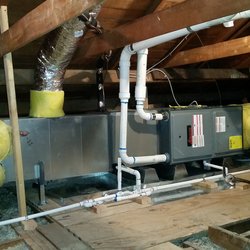
hvac I was on a video call with my able partner David Kim this morning.  When the conversation turned to the elaborate requirements of the California Energy Code, he had what I thought was a really great idea. "What if we could build without air conditioning?"

I think that's genius.  There are lots and lots of Architects and Sustainable Design people running around these days.  If we can challenge that brain trust to design buildings that do not require air conditioning, I'm sure they could come up with all kinds of great stuff.

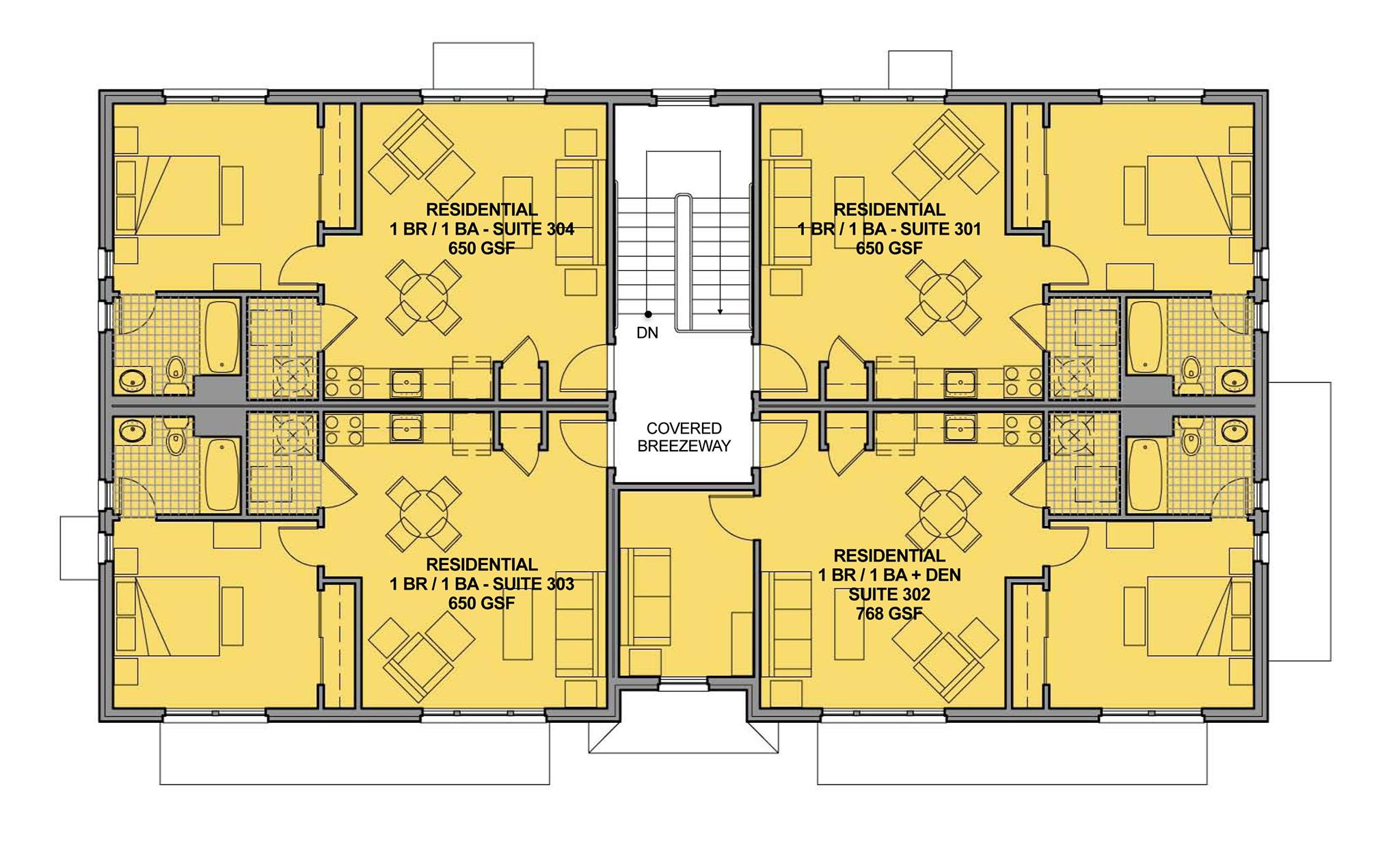
Another look at how to build a 3 story building without an elevator

10830511_10205254375511961_489876011085277063_o (1) Ground Floor with one accessible unit to take care of the Fair Housing Act requirement for all the ground floor units  to be accessible.

Upper Story Plan


Reprising this post because folks keep asking me about it via email, etc.

These thresholds fit a three story apartment building or mixed use building into the fire/life safety requirements of the International Building Code (IBC) and the accessibility requirements of the Fair Housing Act.


1. All ground floor units are accessible/adaptable (minimum one unit). 2. TYPE V wood frame construction with fire sprinklers. 3. When built with a single stair, upper stories are limited to four units each. (more than 4 units on a floor and two stair will be required separated by a rated corridor at least 1/2 the diagonal of the building floor plate in length --1/3 for buildings with fire sprinklers.) 4. 2nd floor units are limited in size to 125′ max. exiting distance from the furthest point inside the unit to the entry door. 5. 3rd floor units are limited in size to 125′ max. exiting distance from the furthest point inside the unit to the entry door. (3rd floor units can be two story units with internal stairs as long as the max. exiting distance of 125' is observed).


Code research and design by David Kim


A comment from Will Dowdy:

This is a good summary. It’s probably worth being explicit about that ground floor unit. If you don’t have a unit on the ground floor, the requirement for accessibility is shifted to the second floor of the building, which means that you’re stuck with an elevator. BIG problem. This design is an elegant solution.

What is a Small Developer/Builder Shark Tank?
shark girl canalside buffalo
Since putting up the To Do List yesterday, I have had a number of folks ask me "What's this shark tank thing?"
The Shark Tank is  a platform for recruiting and accelerating the skills of small developer/builders and laying the groundwork for incremental development in a neighborhood or municipality.  It works like this:
  • Recruit likely new developers from the local area with help from local trade suppliers, the Lumberyards, Truss companies, Drywall Supplier, Plumbing, HVAC and Electrical Supply House.  Who among their customers look promising for stepping up their enterprise so they can build infill/retrofit projects at a small and incremental scale.  Make the rounds with the local Chambers of Commerce, the NAIOP, ULI, churches, banks & credit unions and the entrepreneurship programs at the Community Colleges and Universities.
  • Candidates get homework and guidance on how to prepare development proposals for several local sites based upon the Charter and within a prescribed area to "flood the zone" with as many small operators as possible for maximum impact.  They are now on a clock and must focus on completing the homework on deadline.
  • The municipality has made plans for capital projects that make the prescribed area for the projects viable, traffic calming, bike and transit investments, an overlay of code reform and removal of minimum off-street parking requirements. Establishing a Pink Zone (See www.LeanUrbanism.org) as preparation for the Shark Tank event would reinforce the importance of adopting the right code platform.
  • Candidates bring their proposals to a 4 day intense workshop with solid coaches and specialists who help them understand the fundamentals and strengthen their pitches.
  • On the fourth day they pitch their deals to qualified investors and construction lenders who are there because they are aligned in interest with the goals of the effort and have signed on to the criteria that all the deals much meet in order to be pitched to them.
  • Coaches follow up with the developer/builders whose deals are funded and sort out a gameplan for refining and improving the pitches of deals that are not funded with the initial round.
  • While competing for investment the developer/builders form a cohort that can provide continued support.  Coaches will reinforce the realities of the market and the need to build capacity and the right code and public infrastructure to sustain infill and retrofit. Their competition for resources is the conventional development at the edge of town.  There are more than enough sites to occupy all the candidates and the market for infill and retrofit cannot be satisfied in the next 20 years.