 In a recent Facebook post my friend and colleague Steve Mouzon, author of Original Green, posed an important question:
"Why is it that when there is an attempt to recover a lost tradition, that which is built is not the tradition but rather a cartoon of that tradition --have we lost the ability to see clearly?"
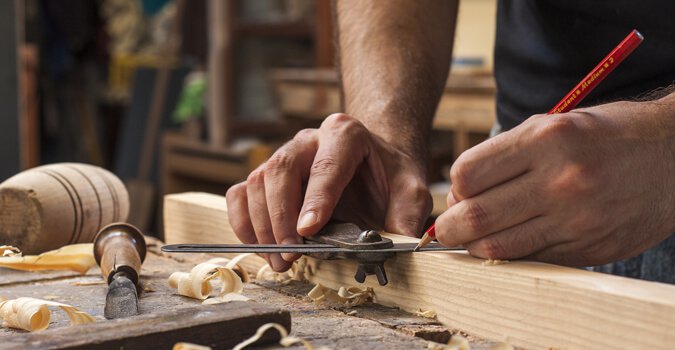
I think our habits of building are fractured and out of sync. We can't seem to capture the rhythm of the mechanics of design and construction well enough to transcend a stilted mechanical approach. The people who built the traditional houses of the late 19th and early 20th centuries had habits of building that were reasonably intact. We try our best to be fluent in a language that, if not dead is at least seriously wounded. While some struggle to produce drawings that communicate well, others struggle to read them well and then launch ahead sure that they've "got it". We trust our brains when we probably have little reason to. Everyday tradeoffs in building present themselves with reliable frequency. We are not wired to be obsessive or hyper-vigilant when performing carpentry or ordering lumber. At some point, you believe that you have a handle on the task at hand. Even hearing someone explain that "We do this because..." can feel abstract and a somehow disconnected. Skipping over the surface of a tradition feels pretty profound, so you don't know that you are supposed to be diving deep. We are thrilled at building something that seems darned good compared to today's usual habits of building, so we can't see a more sublime experience just a few steps away.
Imagine that you are a housewright in 1889. You spent the winter producing window sashes, doors, moldings in your barn with the collection of hand planes and the Asher Benjamin handbook you inherited from your dad. In the spring you lay up a stone basement and start framing a house. When it comes time to install those windows, doors and trim your grasp of to how the pieces go together makes so much more sense than someone setting windows and coping trim today. Whether in the design studio or the field, it is rare for us to get Malcolm Gladwell 10,000 Hours in on the full arc of the work, on the habits of building. So, yes, Steve we have lost the ability to see clearly. These days we see as if through a glass darkly. We need the discipline and structure of craft and habit to recover our sight. Today the flow that emerges from that discipline and structure is not available to most. On a good day some talented people provide us with some well-intended choreography of a dance few of us have ever seen performed by someone with real mastery.