Plain talk on building and development
Test Img - Chico2.png

Blog: Plain Talk

Plain talk on building and development.

What is a bigger problem than a bubble in house prices?

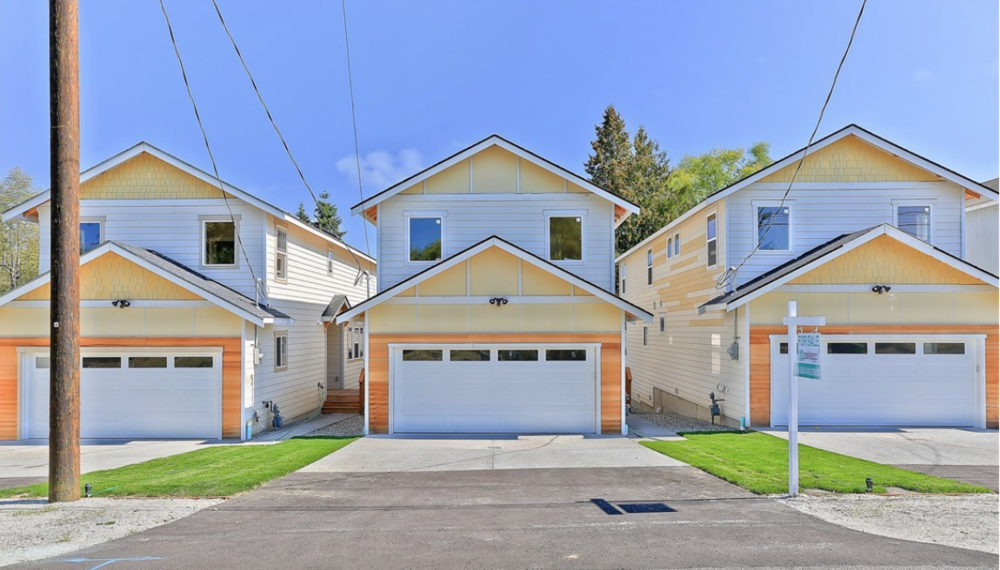
Snout Houses with no front door.

Today I saw a lot discussion and concern about a potential housing bubble in the Facebook chatter among residential realtors.

All over the Atlanta region we continue to see rapid increases in house prices and rents. Folks are wondering how long this is going to last. Toward the end of the piece linked below, (part one in an excellent series of five from Strong Towns) there is a breakdown of housing production in Atlanta, by Eric Kronberg. I think a similar breakdown probably applies to the larger Atlanta metro.

With 50,000 people moving to the region every year we cannot keep up with that demand on the production side of the enterprise. That keeps inventories very low and prices high. Why are we so far behind on production of new housing? The biggest reason is a serious long term shortage of skilled construction labor. Remember, there was little or no work for these folks during the Great Recession. So people retired, changed their line of work, or returned to their country of origin. The shortage is not surprising. What would you do if you could not find work for five years?

With the labor shortage, productivity in residential construction gets hammered. It takes longer to get anything built if you can’t rely on your trades to show up. Construction schedules get stretched with nobody working on the site as projects compete for the scarce resource of people who can build.

Costs rise dramatically, but while lots of folks in the trades are charging more, many are making less money at the end of the day because they can’t finish the project when other trades don’t show up for weeks at a time. A plumber I know had his crew completing work on 30 houses last year, even with the pandemic. This year he says he’ll be lucky to work on 18. His overhead is the same with that reduced throughput, so he is making less money per house. -and his best plumber went to work for someone else. Let’s not bitch about the cost of construction and ignore the really low levels of productivity we should expect from the folks doing the work because there just are not enough of them to go around.

Add supply chain problems to the shortage of skilled labor and the problems of low levels of housing production are going to be with us for a while. Beyond the significant short fall in housing production, the types of housing being built are skewed to the higher end market segments.

Starter homes and Multifamily are not getting the attention needed, so the range of housing types being brought to market is impacted. As for a bubble, I think we have more immediate problems. The gap between how much a service worker is paid and how much it costs to keep a roof over their head gets worse every day. Atlanta is moving from its familiar position as a vital city with a lower than average cost of living and a great workforce, toward being a city with a high cost of living and workforce shortages. We will continue to see rapid appreciation in home prices and increases in rents because people will continue to move here in large numbers and we cannot build fast enough to provide housing for them. The construction labor shortage is going to be part of our reality for the next 5-10 years.

While folks in Atlanta can continue to speculate, betting that the price of their house is going to continue to increase rapidly for the foreseeable future, the lack of housing production outside of the high end market segments is going to cripple the regional economy and force people who cannot afford to live inside the Perimeter to endure ever longer commutes from the surrounding rural counties.

You think traffic is bad now. Force a quarter of the population to drive to cheaper housing and see what happens…. The fundamentals are out of whack and the folks with less resources and fewer opportunities are going to bear the consequences. So what can we do about that? The 5 part series from Strong Towns presents some neighborhood scale answers and some hope.

Where did all the small developers go?

Real Estate Math is Relentless
podium building .jpeg

I continue to be impressed with the silly and rather elaborate mythology otherwise intelligent people whip up around housing and money.

For example:

Podium buildings with elevators cost more per SF to build than three story walk up buildings. Concrete and steel mid rise building cost even more per SF than podium buildings.

How many times have you seen people lose the minds of the construction of podium or mid rise buildings—claiming that “this is going to make housing unaffordable!”

Okay. First, coincidence is not causation. When there is less sunshine I am more prone to depression. I did not make it rain by feeling bad….

Real estate math is relentless. You can’t construct buildings that cost more per SF _until_ housing becomes unaffordable.

When rents increase to the point where they can support a more expensive form of construction, and it looks like there are plenty of people willing to pay higher rent to live in a desirable place, that’s when you can build a more expensive building.

rjohnanderson
Excited About Inclusionary Zoning? Do the Math, and the Excitement Will Pass
mark w. bewildered.jpeg

Inclusionary zoning( IZ) efforts completely depend entirely upon getting the incentives right. Otherwise nothing gets built. Greater housing choice and affordability do not happen by decree or assertion. There is actual math involved. Developers will have to do that math, so I figure it is only reasonable for the elected officials who vote in IZ requirements should do the math as well. IZ incentives typically include things like;

  • An additional story in building height above what the base zoning allows.

  • A density bonus; more dwelling units than the baseline zoning allows.

  • A waiver of impact fees on the affordable units.

  • A partial or total abatement on the property taxes on the affordable units for a specific period.

If there is still a dumb zoning provisions on the books like excessive suburban setbacks, or minimum off-street parking requirements, granting a density bonus that cannot be built without going from surface parking to much more expensive underground or structured parking (raising construction cost, increasing operating expenses and raising rents.)

If your town currently has a really lousy baseline zoning code, low density, high off-street parking requirement, the density bonuses and partial parking reductions may not be enough to make a project pencil under an IZ approach.

If the density bonus can only be used by stepping up the design of the building to a more expensive building type, say from a three story wood frame walk up building with a single stair to a four story building with two exit stairs and an elevator, the cost of the building may no longer be supported by the likely rents. Depending upon the specifics of the project, a density bonus can easily take you one step forward and two steps back on building cost.

I have seen a number of well intentioned and politically popular Inclusionary Zoning efforts turn into the delivery of very few units. These measures can be politically popular because of the magic thinking people are able to do if they don't have to actually look at the math. IZ feels like affordability can be manifested by making the developer do it. Forcing the developer to do something under duress, without looking at the math can a popular, but ineffective approach.

If the developer has to deliver affordable units under duress or pay an in-lieu fee, what happens? The in-lieu fee or cost of the affordable units whose rents cannot support the cost of building a new apartment and managing it gets born by the rest of the project.

If the market rate units have to internally subsidize the affordable units while still providing a return on capital for the developers investors, the rents on the market rent units are going to have to be increased. This can squeeze out the middle income units. —An unfortunate, if unintended consequence.

Some developers just pay the in-lieu fee and build more expensive units because they don't want the risk and the brain damage of keeping affordable units in compliance for an extended period.

The theory behind IZ is that if the economic burden of delivering affordable units is shared across every project above threshold number of units, eventually the people selling land that allows for denser development will have to reduce their sales price. The reasoning is that what a developer pays for land is supposed to be a residual cost (as in all the other costs come off the top and what is left over, the residual is the amount available for the land purchase. The problem with this economic theory is that land owners holding property zoned for dense development have very low holding costs and almost no property taxes to worry about. Let the other guy take a lower price for their land. I will sit on my sites and speculate that next year the number will be better. Land speculators are not real estate economists.

So here’s the deal. If you think IZ is a good and necessary policy, you have to be rigorous about the implementation. Do. The. Math.

Sit down and model actual projects to see if the project still pencils under the combination of required affordable units and incentive. If there is nobody on the planning staff who can perform the Dark Arts of basic developer math, contact someone like Neil Heller at Neighborhood Workshop.

https://www.neighborhoodworkshop.org/

rjohnanderson