Plain talk on building and development
Test Img - Chico2.png

Blog: Plain Talk

Plain talk on building and development.

Comparing Purchase/Rehab loans form Freddie Mac, Fannie Mae, FHA, and VA

Yesterday I got a question from a member of the Neighborhood Development Facebook Group.

They wanted to know why there are a number of low down payment mortgage products for 2-4 unit buildings, but no low down payment construction loan products for new 2-4 unit buildings. The reason there is low down payment money for building but not for new construction is the kind of underwriting that gets done on these agency loans. Construction loans have a short term typically only 1 or 2 years. Most construction loans for the 1-4 unit buildings covered by agency loans are made by local community banks.

Agency loans (insured by The VA, FHA, Fannie Mae, Freddie Mac) are either sold to Freddie Mac or if they are guaranteed by the VA, FHA, or Fannie Mae, they could be purchased by a conduit financial firm and bundled into a Mortgage Backed Security and sold on Wall Street, primarily to institutional investors. The market for those securities wants a long term instrument that is backed by the insuring agency. As 1 or 2 year construction loan is not long term like a 15 or 30 year mortgage secured by a building.

There are exceptions to the agencies underwriting construction risk in with Renovation Loans which convert to 30 year mortgages. The FHA has the 203(k) Loan. Fannie Mae has their HomeStyle Loan, Freddie Mac has their ChoiceRenovation Loan, and the VA has a Renovation Loan.

Note: The Agencies classify 1-4 unit loans as "Single Family" loans (even if they have more than a single dwelling unit....).

I rank these below in order of my preference and note things unique to each loan product. You should compare the term sheets and figure out which loan product is the best fit for you, and be sure to find a local :

#1 Freddie Mac ChoiceRenovation

Pros: A generous Loan to Completed Value. Administration of the Loan draws is easier than the FHA and Fannie Mae process. No Freddie Mac Certification of the Contractor doing the work is required.

Private Mortgage Insurance (PMI) is required for loans that will have less than 20% equity after the project is completed. You can get rid of PMI when you can demonstrate that with an appraisal that you have 20% equity or more. Freddie Mac has a push on for underwriting 2-4 units projects.

75% of the gross rent from the tenants counts toward the borrowers income to qualify for the loan. The LTV ratio come down to 85% for 2-4 units. LTV (-using completed value) is 80% for a 2 unit and 80% for a 3 -4 unit loan

Cons: If you are going to live in one of the 2-4 units, Freddie does not count your rent as income to qualify for the loan, but the borrower must occupy one of the units for at least one year.

The construction period is expected to be 12 months or less. If the construction is delayed and goes past the 12 month milestone the local lender has to get and extension from Freddie Mac. Not hard to do in the current construction climate, but one more step.

This loan can be used to build a new ADU within the 2-4 units framework.

Allows up to 35% non-residential if in compliant with local zoning. While this can be a separately metered unit or units, I recommend labeling the space "home office" and not commercial to avoid confusing the local underwriters who tend to refer your deal to their local commercial lenders for a 5-7 year commercial mortgage if they see the word commercial on the plans. (I recommend putting the non-residential space on the House/common area electrical meter and gas meter and just build the utilities for the non-residential space into the rent.

Lenders like this loan because they can deliver it to Freddie Mac before the construction is completed, increasing their liquidity. Freddie Mac has recourse if they take the loan before construction is limited and will make the lender cure any problem with the loan before they will buy it. This is a better set up for the local lender than the Fannie Mae Loan.

#2 Fannie Mae HomeStyle

Pros: Easier to get through underwriting than the FHA 203(k). Less hassle to process construction draws than the FHA 203(k).

HomeReady is Fannie Mae's PMI and is required for loans that will have less than 20% equity after the project is completed. You can cancel PMI when you can demonstrate that with an appraisal that you have 20% equity or more.

The house does not have to be occupied by the borrower, so this is a better loan for investors who do not expect to live in one unit for at least one year.

75% of the gross rent from the tenants counts toward the borrowers income to qualify for the loan. You can get a limited cash out when the loan converts from construction to the 30 year mortgage.

Allows up to 35% non-residential if in compliant with local zoning. While this can be a separately metered unit or units, I recommend labeling the space "home office" and not commercial to avoid confusing the local underwriters who tend to refer your deal to their local commercial lenders for a 5-7 year commercial mortgage if they see the word commercial on the plans. (I recommend putting the non-residential space on the House/common area electrical meter and gas meter and just build the utilities for the non-residential space into the rent.

This loan can be used to build a detached ADU within the 2-4 units framework.

Cons: Loan amount cannot exceed 75% of the completed value or the cost of the purchase + the cost of renovation --Whichever is _Less_ This typically means that it is a 75% LTC loan unless the appraiser's opinion on the Completed Value is lower (at which point you may be over building for the neighborhood -or the appraiser is just wrong. Once the appraisal report hits your file if you disagree you can ask them to take another look and provide some information they may not have considered, but usually this means you need to go to another lender who will engage another appraiser.

The Fannie Mae HomeStyle Loan requires the borrower to complete their Homeowner Education program.

#3 FHA 203(k)

Pros:

The HUD 40001 Underwriting guidance which cover the FHA 203(k) and 203(b) loans has a specific section title Mixed Use (added in 2915) which allows up to 49% non-residential if in compliant with local zoning.

While this can be a separately metered unit or units, I recommend labeling the space "home office" and not commercial to avoid confusing the local underwriters who tend to refer your deal to their local commercial lenders for a 5-7 year commercial mortgage if they see the word commercial on the plans. (I recommend putting the non-residential space on the House/common area electrical meter and gas meter and just build the utilities for the non-residential space into the rents.

Cons: The Underwriting process can take longer than the Fannie or Freddie Loans and the administration of the loan draw is more grief as well.

Detached new ADU's are not allowed, but you can create an additional dwelling units within the renovated building if allowed under local zoning.

All 203(k) loans require FHA's PMI for the _life of the loan_. That's less burdensome for a one of two unit loan, but can be pretty stiff on a 3 or 4 unit loan. You cannot cancel the PMI.

Completion of FHA’s Homeowner Education program is required.

Refinancing the 203(k) or the 203(b) (—the standard 1-4 unit FHA mortgage) is the only way to get out of the PMI requirement. It is very difficult to refinance this loan if you are living in one of the units. If you have more than 35% of the building area dedicated to non-residential use you will need to convert some of that space to storage rented by the residential tenants or a bike room or dog washing station to get within the 35% residential cap for the Fannie and Freddie loan product in a refinance.something. Your other option would be a local community bank's commercial mortgage where the underwriting typically doesn't car how much non-residential or if you live in the building. Loan terms are 5-7 years with a potential 5-7 year renewal.

#4 VA Purchase Renovation Loan

Pros: 0% down if the borrower has a Certificate of Eligibility from the VA

Cons: Only available for veterans with a certificate of Eligibility.

Renovation costs are limited to $50,000.

Options for local lenders can be pretty limited.

rjohnanderson
Small Developers and the Construction Labor Shortage -time to dig deep.

During the Great Recession there was very little construction work to be done for about five years. During those five years lots of people in the trades retired, changed careers, or returned to their country of origin. Now the demand for housing is overwhelming the supply of existing and new homes. The problem is made worst because suppliers of lumber, drywall, insulation, HVAC equipment, and windows are all scrambling to to get supplies to construction site. The supply chain will get unkinked with time, but the shortage of skilled construction labor is a structural issue that is not going to go away in the next 10 years.

At the national level the NAHB and others in the housing industry have been pushing for investments in shop classes in public schools and other training initiatives and for immigration reform. A guest worker program and a path to permanent residency or citizenship for workers who are sponsored by their employer are frequently brought up in lobbying efforts.

Let's say some or all of those initiative get attention and funding. What do small scale local developers and trade contractors do in the meantime?

Small outfits doing modest incremental development projects in distressed neighborhoods are already operating on thin margins and taking real risks to make their neighborhood better. If the the labor shortage increases labor costs and reduces the skill levels of the people you can hire, that additional cost is going to have to be passed along in higher rents and higher home prices. How do we compete with bigger outfits doing bigger projects that can provide steady work at higher wages?

I figure we are going to have to grow our own. I also figure we will need to solve this problem by making it bigger.

It’s time to rethink everything about how we train people in the trades and how we organize work on the site. Before the Housing Crash, the Great Recession, and the Covid 19 Pandemic lots of small residential trade contractors struggled with the management and paperwork required to stay in business, pay their taxes, and stay out of financial trouble. For most, learning a trade teaches you very little about running a business.

This is the time to gather the resources needed to provide a clear path for people entering the trades for the first time to see how they can own a business, own a home, and own some buildings. Someone learning how to hang and finish drywall could become a drywall contractor in a couple of years with good mentoring and the support of a local QuickBooks maven. If you are in the trades you are well positioned to connect with investors and renovate buildings as a partner. Along the way you will need to repair your credit and join a cohort of other folks looking to leverage construction skills into renovated or new buildings.

Residential construction trades have become quite specialized and any project4’s schedule depends upon excellent communication which can be hard to maintain when every trade is being pulled in different directions. If the electrician can’t show up to rough in after the framer gets their inspection, the project completely stops until they can finally make it to the site. If that takes three weeks, then all of the following trades need to shift their work around and go work some place else. After that shuffle you may not get your plumber or HVAC outfit back to the site for a couple weeks… Most trades have the same overhead if they work on 5 houses or 25. A trade’s throughput, their productivity is what makes for a good year or a bad year. If you are not doing enough work, you can charge more and find out that you made a lot less at the end of the month. A developer who cannot manage a schedule people can trust could wreck a trade’s cash flow and drive them out of business.

What if the small developer’s construction site is a place committed to training —and to cross-training people to perform multiple trades? A well run site is a very satisfying place to work. Can it also be a much more productive place to work as well? Can it be the place where small developers pay it forward and help mentor people in the trades so that they can build a stable life and then build wealth for their family?

What’s the alternative? We could just keep grinding along with limited access to reliable trades, and see if we can pass along higher costs as our projects take 6 or 8 months too long and our productivity tanks.

I think we should dig deep and find a way to take the incremental development projects in our neighborhoods to the next level. I think the ability to provide training and mentorship is going to be the key to meaningful and significant work in the next ten years.


rjohnanderson
Will Banks Invest in Distressed Neighborhoods?

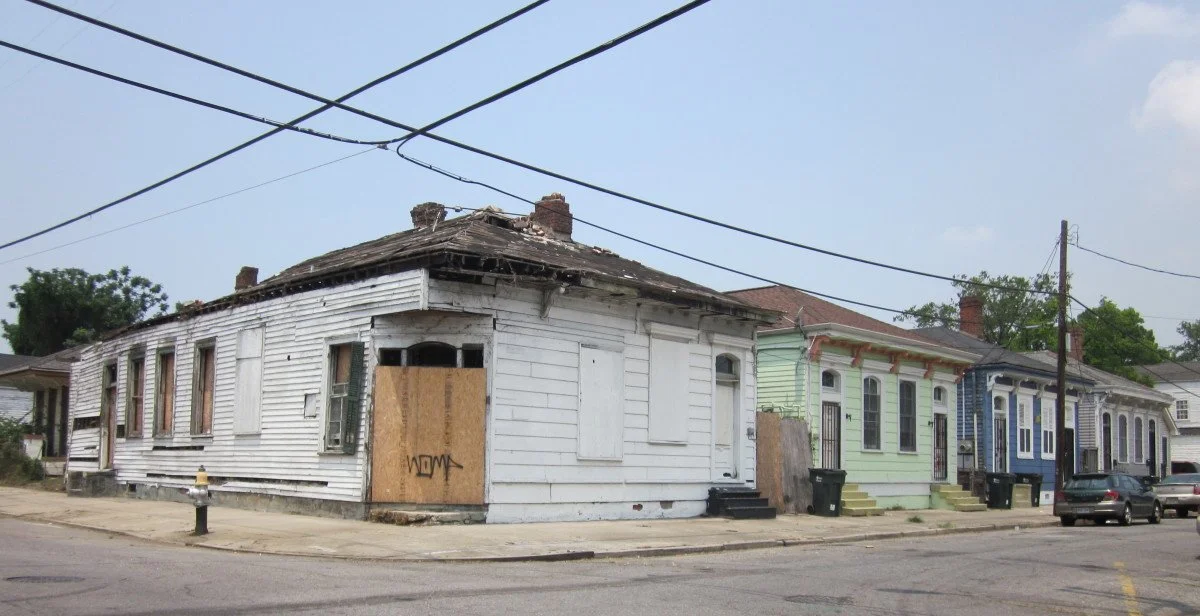
Boarded up corner store in New Orleans

First off, let’s be clear in the terminology. Banks don’t invest. A bank will sell you a construction loan to build/rebuild if you and an investor put up 20-30% of the project cost. A bank will sell you a mortgage to retire the construction loan for 70-80% of what the building is worth once it is completed and leased.

Banks don’t invest. Banks lend money, secured by an asset the can sell to recover their loan amount if you default on the loan and the have to foreclose. Banks are not doing you a favor. They need to sell you a loan. That’s how they make fee income. That’s a big part of their business model. A loan officer on base salary plus bonus is basically a commissioned salesperson. (They are just selling loans and not automobiles).

Banks do not invest. An investment carries significant risk that you will lose your principal. It is not secured, collateralized, or guarantied. It is not insured against loss.

When a bank sells you a construction loan to build or renovate a building, or a mortgage on a completed building, those loans are secured with the borrower's asset, something the bank can take in the event the borrower defaults on the loan, along with a personal guaranty from the borrower that the bank can enforce if the foreclosure and sale of the asset does not cover the amount of the loan.

Where they make loans and on what kinds of projects varies from bank to bank, but again, banks are not making investments. They are selling loans funded by their depositors cash or cash they borrowed from the Federal Home Loan Bank or similar institutions. They have to maintain loss reserves of 10% against the loans they make. The cash their shareholder's have invested in the bank is used for those required loss reserves.

Now, if your question is "Will banks sell loans to people working in downtrodden areas?" my answer is yes, but the terms of those loans will be adjusted based upon the risk of a default the bank's underwriters see in the downtrodden area.

Those loans will require robust guarantees from individuals with significant net worth. Those loans will probably be for 50-65% of project costs or an even smaller portion of the capital stack because appraisers need comparable sales of building values in the area to comply with the standards of their practice.

If you are one of the first people building/rebuilding in a distressed neighborhood, you will be more likely to use private lenders and equity to do the first couple projects to establish data that can be used by the local appraisers. Banks are required to use the appraiser's opinion of value as the starting point for underwriting the loan. The opinion of value establishes what the asset is worth in case they get it back and have to dump it in a quick sale.

Early developers take on the risk that the distressed neighborhood may not support rents sufficient to support the costs of new construction, which is why we recommend that small developers focused upon the distressed neighborhood start small, with something they can live in if necessary.

Distressed neighborhoods typically need more than supportive appraisals, investment of social capital, the time and attention of the small local developer become the basis for building trust. Find work for folks in the neighborhood. Connect your rookie plumber with a decent bookkeeper, pick up trash and litter on the regular without fanfare.

The trust of your neighbors is a competitive advantage for the small operator for when the big developers from the other side of town or from out of town show up because the small developers have done the heavy lifting of proving the market and establishing comparable sales and NOI/cap rate data for the appraisers to use for larger deals.

The people who already live in distressed neighborhoods are in a position to learn the skills required to build/rebuild is they start small and build a culture of local collaboration. Investors invest. There is no shortage of folks willing to invest in a sound real estate project with a solid operating partner. An investor with a connection to a distressed neighborhood may have personal reasons for wanting to invest there.

rjohnanderson