Plain talk on building and development
Test Img - Chico2.png

Blog: Plain Talk

Plain talk on building and development.

DIY Regulatory Reform -Dryer Repair, ADUs, and Bike Lanes

I am hearing from an increasing number of people trying to figure out how to make the place where they live and work better. Sometimes this follows a vacation or business travel to a place that has built some protected bikeways, a walk down a tree lined street fronted with gorgeous four-plexes with two story porches, or a stay in a sunny apartment over someone’s garage, Folks return home and start to ask why can’t we have that here in our neighborhood? The benefits seem so obvious, right?

Typically ,there are local regulation that prohibit the cool thing you saw in some slightly more progressive place. The town has street standards from the 1970’s applied to the entire municipality and those street standards don’t allow protected bikeways, or on-street parking. The zoning regulations for 3/4 of the town does not allow Accessory Dwelling Units lADUs) like that apartment over the garage. The same zoning does not allow anything but a single unit home, even along a transit line with frequent service, so a four-plex on that vacant corner lot is out of the question.

Where did these rules come from? Why are they so…… dumb? What can we do about it? Poke around on the town’s website and you can find the community’s Comprehensive Plan (planner’s slang: Comp. Plan). The Comp Plan is full of all manner of great ideas, goals, and policies to make the place better and a maybe even a Work Plan for how to change the local regulations to make those great policies legal, and how to pay for things like on-street parking and protected bikeways. Unfortunately, many communities never get around to implementing the goals and policies they spent a lot of time and money putting into the Comp Plan. There are probably a number of reasons for this failure, but what do you do if your town is stuck with goals that can’t get implemented?

If the regulations are in the way, the zoning code and street standards, you should probably change those. Better regulations don't just happen. Any significant change in what is on the books typically brings out lots of folks convinced that the change can only make things worse, the change will be too expensive, or the change will bring the wrong sort of people and reduce their property values. In order to change the rules you have to get good information into the hands of lots of people and build trust. Take senior staff, elected officials, and neighborhood activists on field trips to see well executed places where people are building/rebuilding walkable neighborhoods. Learn what is in your Comprehensive plan, your LCI study and your local zoning code right now. Know the current rules of the game. figure out what rules stand in the way of reasonable things that could be done in your town.

A change in the current rules and procedures that clears the way to deliver on the goals and policies of the Comp Plan adopted by the city council should get support and be adopted without too much fuss, right? Nope. Adjust your expectations. Recognize that this is going to take a while. Identify the early, relatively easy things to fix with a simple text amendment that could help create momentum. Figure out a strategy with near term and long term goals for the rules that need to change. Some bigger moves may have to wait for a comprehensive overhaul of the rules following the next Comp Plan update in two years. At least that’s what the city staff will probably tell you. Press for changes along the way anyway. Build political capital. Build trust by sharing accessible information about the benefits of the goals the rules are obstructing.

People tend to resist change, particularly change they don’t understand or change that is proposed by someone they don’t know, don’t like or don’t trust.

Don’t assume that your town’s current regulations were handed down by capable wise professionals who could see the future. A lot of frustrating rules were adopted to prevent some terrible thing from happening, and, but the rules were written in a way that prevents a number of good things from happening. You are not questioning the motivation of the folks who wrote the regulation, just the affect the rules have on your community now.

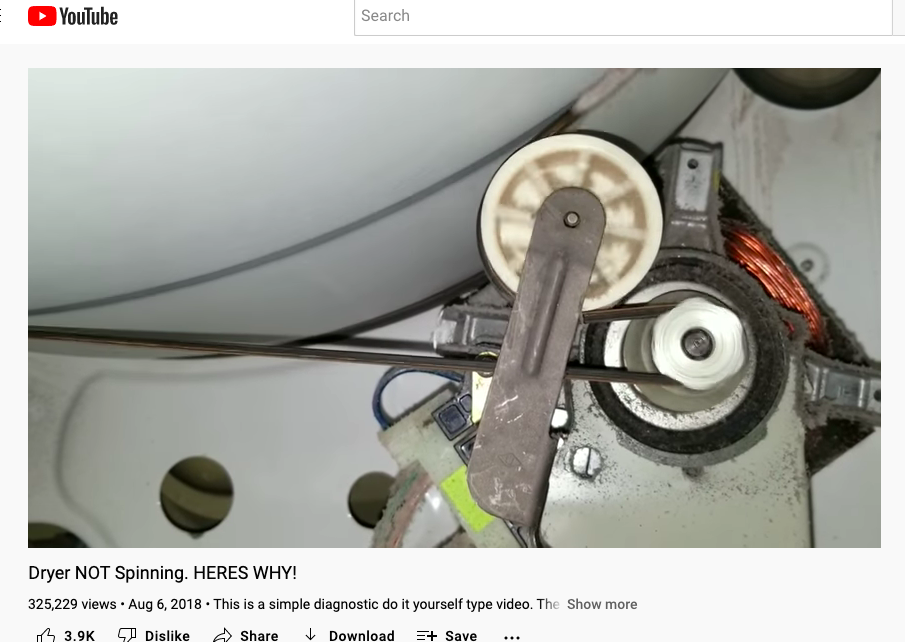
Dig in and learn. I know someone who diagnosed why her dryer wasn’t working by watching a couple of YouTube video. She figured it out, bought a part online and fixed it. Most folks find appliance repair quite intimidating, but it ain’t magic. Your local zoning regulations aren’t magic either. If you can figure out a way to put in the work, you can change the things that are holding your town back, mired in resignation and apathy.

Don’t go it alone. Find your people. Find other folks on your local social media willing to meet for coffee and work together. Research the rules in those other places with the cool stuff you want to do in your town. Start a community development book club. Build a constituency that is clearly not going away and will need to be engaged by the city staff and elected officials. Have as many conversations as you can outside of the official on-cable-TV public meetings. Avoid embarrassing people with information you figure they really should know if they are going to be good at their job…(nobody likes that.) It will be a grind, but with time and effort you can make a difference. It’s not so different from fixing your dryer.; Intimidating and confusing at first, but if you take it a step at a time, you can get to a good outcome.

rjohnanderson
Pouring Gasoline on Three Colliding Problems

When hedge funds buy up detached houses and town houses, those houses are not likely to come back on the market. They are gone for now and likely for the long term, because they won’t be coming back.

Hedge funds may hold a portfolio of homes for 5-10 years, but when they decide to sell, I seriously doubt those homes are not going to show up on your local MLS. Now that the homes have been bundled, funds will sell to other funds. Houses have been transformed into an asset class to be traded among institutional investors and funds. Once homes get bundled into a fungible asset, people are not going to be able to buy individual homes to live in. Those homes become part of the rental market. For prospective home buyers, they are going to be unavailable.

This will exasperate the shortage of new and existing homes for sale. We cannot build quickly enough and we cannot build inexpensively enough to make up for the gap between housing supply and housing demand.

The worst part of this structural issue is that funds can over-pay for a home on the front end, now that a market for bundled homes has been established, since they are looking at appreciation of a scarce asset that generates tax sheltered cash flow from rents and depreciation expense while they hold it. This gives a hedge fund a competitive advantage in a hot housing market. Not only are they cash buyers who will raise an inspection, but they can pay more than individual homebuyers.

You might think this is like the financial meringue of credit default swap and the bundling sub-par mortgages into securities which led to the real estate crash of 2008, but I think that is not the case. I don’t think funds crowding individual home buyers out of the market is going to lead to some 2008 scale disaster or even a serious correction in the next 10 years. The annual demand for housing does not go away on December 31st. Unmet demand Carrie’s over into the following year. People are still forming new households. The demographics that drive demand for housing are like gravity.

In my view there are three colliding problems at the heart of the supply problem:

1. Lots of people are not paid enough to afford rent and cannot save up a down payment to buy a home. Except for some recent increases, wages have been stagnant for the last 20 years while housing costs have increased steadily.

2. The pain is not spread equitably around the US. Even with double digit annual increases in home prices and rents, folks keep moving to dynamic metropolitan areas for jobs, education, and health care. The housing crisis can be observed all over the US, but we are still a country of regional real estate markets. Some aces are seeing greater increases in costs than others.

3. Productivity in the housing construction sector is really low due to a prolonged endemic shortage of skilled construction labor. Skill construction labor is what folks in the project management trade call the “critical resource “. Production will not increase until there is more of this resource. Local small developers and builders may find ways to be more productive with the people they can find or train, but they will be doing this out or raw necessity. For them, it is a time to innovate or close their enterprise.

These three colliding problems are going to hang around for the next ten years. The activities of hedge funds will just be gasoline thrown on a well-established fire.

Thankfully, the Federal Reserve's decision to raise interest rates has cooled the overheated market to a large extent. That said, the fundamentals of low inventories and a shortage of construction labor will still be in play for the foreseeable future. Homes that were selling in a week before the Fed stepped up are now taking a whopping 4-5 weeks to sell. You could call that a _relative_ improvement, from off-the-charts insane to garden variety crazy.

rjohnanderson
Embedded Urbanists? Isn't there some shortcut?

Incremental Development Boot Camp Columbus, Georgia

For the last 24 years the Congress for the New Urbanism (CNU) has been my primary professional network as a developer, builder, and urban designer.

During that period the CNU has made a lot of progress in providing alternatives to the conventional sprawl development pattern. We figured out a lot of the hardware side of things, better zoning codes, better public engagement, better streets and public spaces, and better buildings. Our greenfield projects frequently produce “Man Bites Dog” stories in the popular press, while our infill and affordable housing efforts are too self evident to merit much attention. I’ve done both, and find that the infill work is much more difficult.


This week is the annual gathering of the CNU tribe, the first time we have met in person since 2019. Looking over the sessions on offer this year, there is a lot of attention on two topics, adapting to Climate Change and addressing issues of Racial and Economic Equity.


CNU members are really good at addressing issues on the hardware side of the built environment, particularly at the scale of the building, lot, block, street, neighborhood, and district. I figure there will be a lot of tools and techniques for Climate Adaptation coming on the foundation of that work. I think my friends and colleagues are well suited for that kind of work.


Racial and economic equity is whole ‘nother thing. The inequity we see in our cities, neighborhoods and sprawling dysfunctional suburbs is a software problem, tearing up the folks without wealth, influence, or choices the most. The CNU has not very good at identifying and solving the software problems producing and reinforcing inequity. Again, we are development, design, and policy types, focused upon solving hardware problems.

The worst impacts of Climate Change will hit the households with the fewest resources and the fewest choices. Black and Brown households. Climate impacts will accelerate the existing structural and systemic inequities. Black and brown households already face the wealth gap. income gap, and the appraisal gap which limit where they can live and where they can live shapes co many outcomes.

In her recent book, Reclaiming Your Community, Majora Carter lays out the persistent problem of concentrating poor people in one part of a city or in large scale subsidized housing projects. She identifies the brain drain from low status neighborhoods and she outlines what folks can do to live in a better neighborhood without having to move. Her presentation at CNU in Seattle in 2016 still kinda haunts me.

The goal of cultivating a new generation of incremental developers has been to provide know how, supportive professional relationships, and access to capital for the people who want to make a difference in their neighborhood and city. We figured it was important to shift the scale of what we are building and to craft new business models for how to build in smaller increments. When the scale of greenfield or infill development is limited to large projects, only large outfits can participate. I think we got that at least half right.


Our goal of cultivating 1,000 small developers has to be amended to cultivating 1,000 black and brown small developers. Building/rebuilding in distressed neighborhoods cannot be left to large scale white guy outfits from out of town. I don’t think producing books, online lectures and coaching or traveling road shows and charrettes facilitated by smart and caring people from some place else are going to advance that goal in meaningful ways. That stuff is helpful, but we had better dig deeper and be more rigorous.

I think it’s time fo build a network of urbanists who want to live and work in distressed low status neighborhoods. To be genuinely local. To be embedded.


rjohnanderson